Label Batteries & Waste Right: Universal Waste Labeling Guide
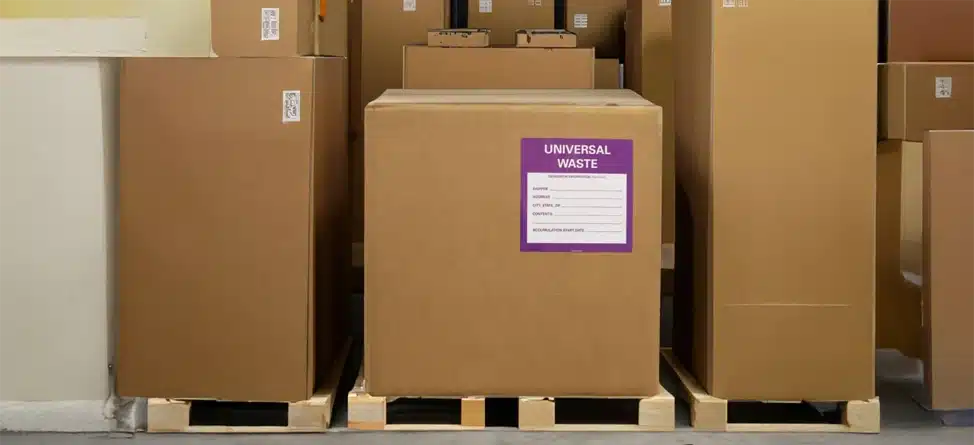
Universal waste labels keep your batteries, bulbs, and e-waste clearly identified so there’s no guessing, and no compliance headaches. The right label means anyone, from your team to an EPA inspector, knows exactly what’s inside and how it’s stored.
Think of labels as the “voice” of your containers, speaking up with the right words, in the right place, and built to last. A smart labeling setup is more than just stickers; it’s a system that keeps you organized, audit-ready, and safer.
Smart Labeling Moves for Batteries & Waste
Good labeling isn’t about checking off compliance boxes — it’s about making sure anyone walking through your facility can instantly tell what’s in a container, when it was filled, and whether it’s being handled correctly. A label that’s obvious, durable, and consistent can prevent mistakes, reduce audit headaches, and keep operations flowing smoothly.
Keep It Obvious
Think of your label as a headline. The most important details — waste type and accumulation start date — should be readable from several feet away. That means bold, legible text in large font, not fine print. If a critical piece of information is buried, it’s as good as missing.
Build for Durability
Labels go through a lot: damp environments, chemical exposure, constant handling. Materials like BOPP offer the moisture resistance you need, and lamination adds another layer of protection in high-touch areas. It’s worth testing adhesives on your actual container before committing; what sticks well to a metal drum may not perform the same on plastic bins.
Placement Counts
Even a perfect label won’t help if it’s in the wrong spot. Position them front and center, ideally at eye level for smaller containers. Avoid sticking them over seams or curves where peeling is inevitable. Visibility is the whole point — don’t make staff or auditors hunt for information.
Consistency Is Key
Every universal waste container in your facility should follow the same labeling style. Using the same size, font, and layout builds recognition and saves time during inspections. Many teams create a template so replacements match exactly, eliminating confusion and speeding up audits.
Room to Write
Pre-printed labels are efficient, but you still need space to add notes like dates or contents. A blank white block on the label makes these additions legible and permanent markers ensure they don’t fade with time.
| Container / Location | Best Label Choice | Why It Works |
|---|---|---|
| Heavy drums | Reinforced adhesives | Handles rough contact, shifting, and impact. |
| Outdoor bins | UV-resistant inks with laminated surface | Prevents fading and wear from sunlight and weather. |
| High-touch warehouse bins | Moisture- & chemical-resistant materials (e.g., BOPP) | Withstands spills, smudges, and frequent handling. |
Maintenance Matters
Even the most rugged label won’t last forever. A quick weekly walkthrough to check for fading, scratches, or peeling makes it easy to catch problems early. Facilities that keep a supply of spare labels on hand can replace them immediately instead of letting issues pile up.
Organization Beyond Compliance
Labeling doesn’t have to be bland. Many facilities color-code waste streams, use icons like batteries or bulbs for instant recognition, or even add QR codes that link to safety instructions and disposal logs. These creative touches make spaces easier to navigate, reduce sorting errors, and train new staff faster.
Lessons from the Field
Consider the Ohio facility that failed an EPA audit because a single battery drum was missing an accumulation start date. The violation was minor but costly, triggering extra scrutiny. Their fix was simple: switch to pre-printed universal waste labels with a bold date field. The payoff was immediate — daily checks took half the time, new staff could identify containers without extra guidance, and audit prep shrank from hours to minutes.
Confidence in Audit Season
When labels are obvious, durable, and consistent, audits stop being stressful events. Color-coding helps waste streams sort themselves, laminated finishes prevent fading, and standardized designs make inspections quick. The small habit of keeping a labeling station stocked and ready, plus a monthly walkthrough, ensures nothing slips through the cracks.
Building a Foolproof System
Assign someone to own the labeling process, set a schedule for checks, and keep extra labels on hand. The goal is to make labeling automatic, no scrambling the day before an audit.For durable, compliant options, our universal waste labels are built to stick and stay, indoors or out.
Universal Waste Labels FAQs
Yes. The label must clearly say “Universal Waste” along with the specific type, like “Batteries” or “Lamps,” per EPA requirements.
Only if the old label is completely removed or covered so the contents are clear.
Large enough to read from a few feet away, most facilities use 4” x 6” to 6” x 8”.
Not federally, but they speed up sorting and make inspections smoother.
Yes, as long as they meet visibility, durability, and wording requirements.
Whenever they’re damaged or hard to read. Regular inspections help you catch problems before they cause compliance issues.
The EPA’s Universal Waste Regulations page has current federal requirements, but always check your state’s rules too.